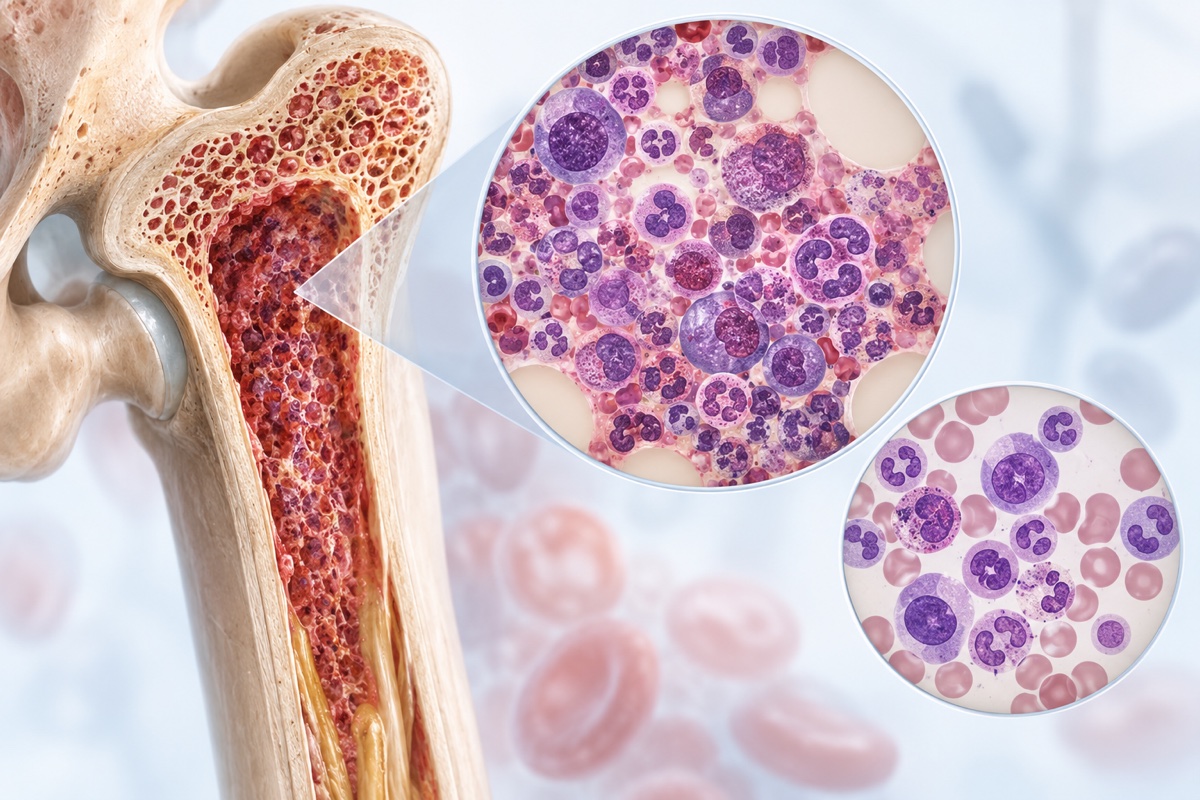
What is chronic myeloid leukemia?
CML begins in a blood-forming stem cell after parts of chromosomes 9 and 22 join, creating BCR::ABL1. This abnormal tyrosine kinase signals myeloid cells to grow excessively. Most people are diagnosed in chronic phase, when cells retain some normal maturation and treatment response is generally strongest. Without effective control, CML can progress through accelerated features to blast phase, which behaves like an acute leukemia. CML is rare in children and occurs mainly during or after middle age. Some people have no symptoms and are identified because a complete blood count shows high white-cell levels. Exposure to high-dose ionizing radiation is a recognized risk factor, but most cases have no clear preventable cause. Care depends on phase, baseline risk, BCR::ABL1 transcript levels over time, kinase-domain mutations, prior response and side effects, medication adherence, other illnesses, age, pregnancy considerations, and patient preferences.
Signs and symptoms
Many people with chronic-phase CML have no symptoms at diagnosis. When present, possible features include fatigue, weakness, reduced exercise tolerance, unexplained weight loss, fever, night sweats, and a sense of fullness or pain under the left ribs from an enlarged spleen. High cell counts can contribute to bone discomfort, abdominal symptoms, easy bruising, or bleeding. More advanced disease may cause worsening anemia, infections, fever, bleeding, bone pain, rapidly enlarging spleen, or symptoms related to very high white-cell counts. These findings are not unique to CML; infections, inflammatory disorders, medication effects, and other noncancer blood conditions can produce similar symptoms or blood-count changes. Persistent abnormalities require laboratory confirmation. New shortness of breath, neurologic changes, unusual bleeding, severe abdominal pain, or fever during treatment should be assessed promptly.
Diagnosis and staging
A complete blood count and differential typically shows an increased white-cell count with myeloid cells at different stages of maturation; platelets may also be elevated. A peripheral smear, blood chemistry, and examination assess related changes and spleen size. Bone marrow aspiration and biopsy can document cell patterns and chromosome findings. Diagnosis requires demonstration of BCR::ABL1 by chromosome analysis, fluorescence in situ hybridization, or reverse-transcription polymerase chain reaction. Quantitative molecular testing establishes a baseline and is repeated to measure response on an international scale. If response is inadequate or lost, kinase-domain mutation testing can help identify resistance and select another inhibitor. CML is described by phase rather than ordinary stage: chronic phase, accelerated features, and blast phase, although current definitions vary. Clinicians also use baseline risk scores and treatment milestones. Care depends on phase, BCR::ABL1 level and trend, resistance mutations, tolerance, adherence, previous therapy, age, and overall health.
Established treatment paths
A BCR::ABL1 tyrosine kinase inhibitor is standard initial therapy for most chronic-phase CML. Available agents include imatinib, dasatinib, nilotinib, bosutinib, and asciminib; selection considers disease risk, other medical conditions, side-effect profiles, pregnancy plans, interactions, and access. Blood counts and quantitative BCR::ABL1 testing are repeated at defined intervals to confirm hematologic and molecular milestones. An inadequate response, intolerance, or a resistance mutation may lead to a dose assessment or a switch to another inhibitor. Adherence is essential because missed doses can compromise response. Some people with a sustained deep molecular response may attempt carefully supervised treatment-free remission with frequent molecular monitoring, but stopping therapy without a structured program is unsafe. Blast-phase disease generally requires an active inhibitor plus acute-leukemia-type therapy, with allogeneic stem cell transplantation considered when feasible. Transplant also remains an option for selected resistant or advanced cases. Care depends on phase, molecular response, mutations, prior therapy, age, organ function, and goals; clinical trials may be appropriate. Fertility and pregnancy plans can require coordinated changes before conception and throughout pregnancy monitoring.
Supportive care
Supportive care includes managing treatment-specific effects such as fluid retention, rash, muscle symptoms, diarrhea, blood-count changes, vascular risk, or lung and heart effects. The exact monitoring plan varies by inhibitor and health history. Medication review is important because acid-reducing drugs, foods, supplements, and other prescriptions can alter absorption or interactions. Reproductive and pregnancy planning should occur with the CML team because some inhibitors can harm a fetus and treatment interruptions require careful monitoring. Fatigue, emotional health, work concerns, and adherence barriers deserve active support. Palliative care can address symptoms in advanced disease alongside leukemia treatment. Follow-up relies on regular molecular testing; patients should report new symptoms and should never change or stop an inhibitor without their specialist.
Questions to ask your cancer care team
Use the questions that fit your situation, and add the details that matter most to you.
- Which tyrosine kinase inhibitor best fits my CML risk and health history?
- What BCR::ABL1 milestones should I reach, and when will they be tested?
- Could any medicines, supplements, or foods interact with treatment?
- When would mutation testing or a change in inhibitor be needed?
- Could supervised treatment-free remission ever be appropriate for me?
Clinics for people exploring chronic myeloid leukemia care

Sunridge Medical Center
Sunridge Medical reports treating all advanced cancers. Its published materials specifically name chronic myeloid leukemia care.
Featured placement is separate from an independent ranking or evidence that a clinic is the best fit for a particular patient.Other source-matched clinic profiles
These profiles mention a matching cancer specialty in their published materials. Browse their locations, reported services, and practical details.












Sources
Source information checked: 2026-09-29. The links below identify the public and clinic-provided materials used for this page.
- NCI: Chronic Myeloid Leukemia Treatment ↗Checked 2026-09-29
- NCI: CML Treatment—Health Professional Version ↗Checked 2026-09-29
How Cancer Clinic Finder compiles information · Suggest a factual correction