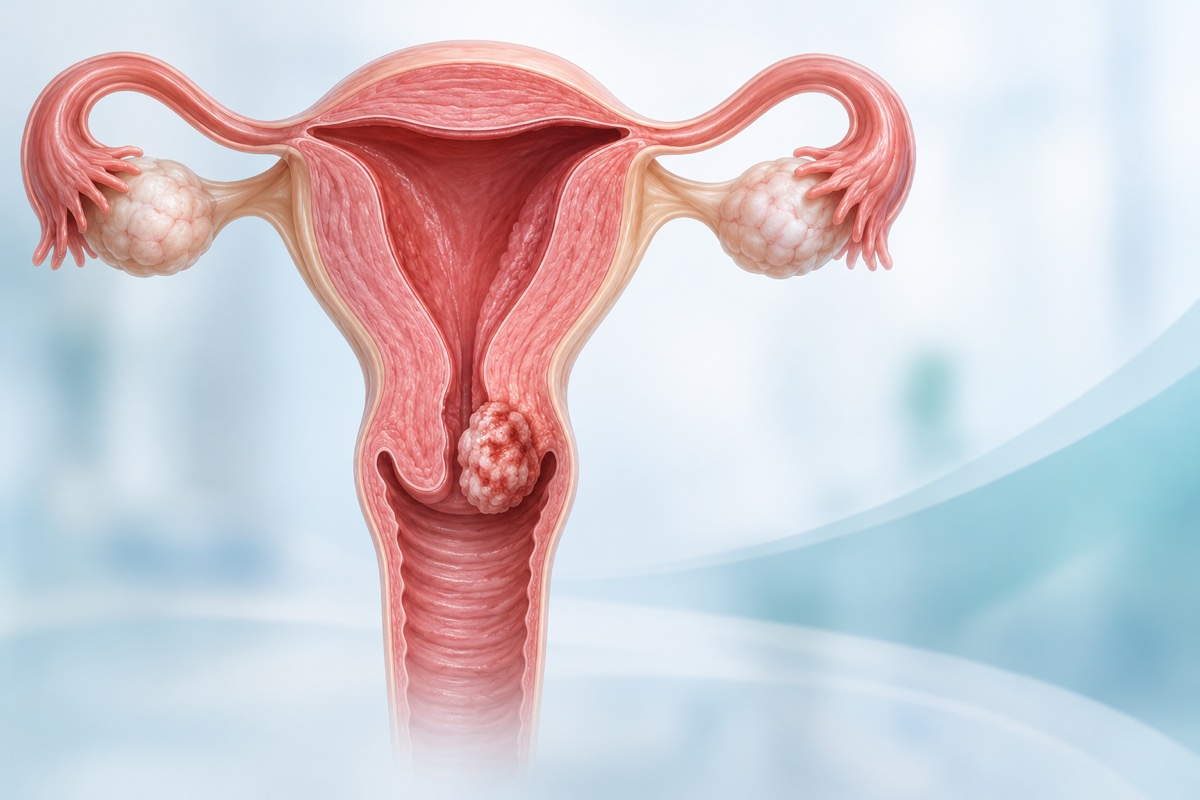
What is cervical cancer?
The cervix is the lower part of the uterus that opens into the vagina. Squamous cell carcinoma and adenocarcinoma are the main cervical cancer types. Nearly all cases are linked to long-lasting infection with oncogenic HPV, but most HPV infections clear without causing cancer. Smoking, immune suppression, and inadequate screening can increase risk of progression. HPV vaccination prevents infection with major cancer-causing types, while HPV testing and cervical cytology find infection or abnormal cells before invasive cancer develops. Abnormal screening results are not a cancer diagnosis and are evaluated according to risk. Precancer is treated differently from invasive disease. Invasive tumors can grow into nearby pelvic structures, lymph nodes, or distant organs. Histology and FIGO stage guide care; PD-L1 and other testing can influence treatment of persistent, recurrent, or metastatic disease. Treatment depends on type, stage, nodes, biomarkers, fertility goals, health, and preferences.
Signs and symptoms
Cervical precancer and early cervical cancer often cause no symptoms. Possible signs of invasive disease include vaginal bleeding after sex, between periods, after menopause, or bleeding that is heavier or lasts longer than usual. Discharge may be watery, bloody, strong-smelling, or otherwise unusual. Pelvic pain or pain during sex can occur. More advanced disease may cause back or leg pain, leg swelling, urinary or bowel changes, blood in urine, fatigue, appetite loss, or weight loss. Infection, fibroids, hormonal changes, pregnancy-related conditions, and other noncancer causes can produce similar bleeding, discharge, or pain. Any unexplained bleeding after menopause, persistent postcoital bleeding, or ongoing unusual discharge should be assessed. Heavy bleeding, fainting, severe pain, or inability to urinate needs urgent medical attention.
Diagnosis and staging
An abnormal HPV or Pap screening result may lead to colposcopy, in which the cervix is examined under magnification and suspicious tissue is biopsied. Symptoms can also prompt pelvic examination, colposcopy, and biopsy. Pathology confirms invasive cancer and identifies squamous, glandular, or another histology. Cone biopsy may establish depth for very small tumors and can sometimes be therapeutic for selected early disease. Staging uses pelvic examination, pathology, and imaging such as MRI, CT, or PET-CT; cystoscopy or proctoscopy is used selectively. FIGO stages I through IV describe confinement to the cervix, extension beyond it, pelvic wall or lower vaginal involvement, nodal disease, and distant spread. Lymph-node assessment may involve imaging, sentinel-node procedures, or surgery. PD-L1 and other biomarker testing can guide systemic therapy in advanced settings. Treatment depends on type, stage, nodes, biomarkers, fertility goals, health, and preferences. Kidney function and urinary-tract imaging may also matter when the tumor affects the ureters.
Established treatment paths
Very small early cervical cancers may be treated with cone biopsy or simple hysterectomy in selected cases. Radical trachelectomy can preserve fertility for some early tumors, while radical hysterectomy with lymph-node assessment is used for other localized cancers. Radiation combined with cisplatin-based chemotherapy is standard for many locally advanced tumors and for some earlier cancers with high-risk features; brachytherapy is an essential part of definitive radiation. Persistent, recurrent, or metastatic disease may be treated with chemotherapy, bevacizumab, immunotherapy, or combinations selected by PD-L1 status, prior therapy, tumor features, symptoms, and health. Pelvic exenteration is an uncommon option for carefully selected central pelvic recurrence. Radiation, procedures, and medicines can relieve bleeding, pain, obstruction, or other symptoms. Fertility, ovarian function, sexual health, bladder and bowel effects, and lymphedema should be discussed before treatment when possible. Clinical trials may offer additional options. Care depends on histology, FIGO stage, lymph nodes, biomarkers, prior therapy, fertility goals, health, and preferences. Follow-up evaluates treatment effects as well as possible recurrence. Smoking cessation can support general health and recovery when relevant. A gynecologic oncologist and radiation oncologist often coordinate care.
Supportive care
Supportive and palliative care can begin at diagnosis and continue during treatment, survivorship, or advanced illness. The oncology team can address pain, nausea, fatigue, sleep, appetite, emotional distress, sexual health, and practical concerns. Nutrition guidance, appropriate physical activity, rehabilitation, counseling, social work, and palliative-care consultation may help maintain function and quality of life. Supportive approaches should complement, not replace, oncology treatment, and should be adapted to symptoms, goals, and medical history.
Questions to ask your cancer care team
Use the questions that fit your situation, and add the details that matter most to you.
- What is the histologic type and FIGO stage of my cervical cancer?
- Are pelvic or distant lymph nodes involved?
- Can fertility-preserving treatment be considered safely?
- Will my radiation plan include brachytherapy, and what effects should I expect?
- Should the tumor be tested for PD-L1 or other treatment biomarkers?
Clinics for people exploring cervical cancer care

Sunridge Medical Center
Sunridge Medical reports treating all advanced cancers. Its published materials specifically name cervical cancer care.
Featured placement is separate from an independent ranking or evidence that a clinic is the best fit for a particular patient.Other source-matched clinic profiles
These profiles mention a matching cancer specialty in their published materials. Browse their locations, reported services, and practical details.


Sources
Source information checked: 2026-09-29. The links below identify the public and clinic-provided materials used for this page.
- NCI: Cervical Cancer ↗Checked 2026-09-29
- NCI PDQ: Cervical Cancer Treatment ↗Checked 2026-09-29
- NCI PDQ: Cervical Cancer Screening ↗Checked 2026-09-29
- NCI: HPV and Cancer ↗Checked 2026-09-29
How Cancer Clinic Finder compiles information · Suggest a factual correction