Use this guide one step at a time.
Key points
- Ask whether the mass is likely renal cell cancer or a different kidney or renal-pelvis tumor, and whether biopsy would change management.
- For localized disease, compare partial nephrectomy, radical nephrectomy, ablation, stereotactic radiation, and surveillance in terms of control, complications, and kidney preservation.
- For advanced disease, confirm the histologic subtype and ask how risk group, prior treatment, symptoms, and organ function shape systemic therapy.
Subtypes and biomarkers
Renal cell carcinoma begins in kidney tubules and is different from urothelial cancer of the renal pelvis or ureter. Clear cell is the most common subtype; papillary, chromophobe, collecting-duct, renal medullary, translocation-associated, and other tumors have different biology and may respond differently to treatment. Pathology from biopsy or surgery can identify subtype, grade, and features that refine risk. Biomarker testing is not used in exactly the same way for every kidney cancer, but tumor profiling may help with uncommon subtypes, advanced disease, or clinical-trial matching. Inherited testing is a separate question. NCI notes that referral for genetic counseling may be considered when kidney cancer occurs at a young age, affects both kidneys, produces multiple tumors, has a subtype linked to inheritance, or appears in several relatives. Syndromes involving genes such as VHL, FH, FLCN, and MET can influence surveillance and family counseling.
What is kidney cancer?
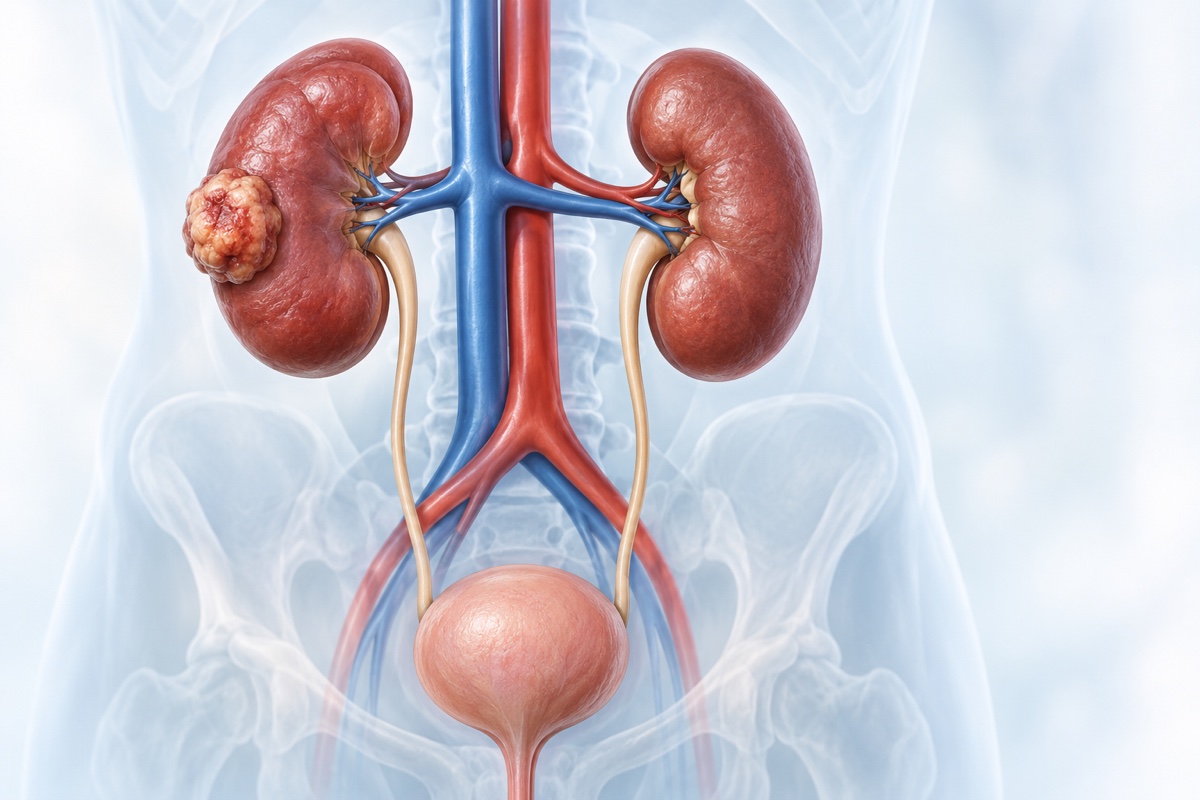
The kidneys filter blood, regulate fluid and minerals, and make hormones involved in blood pressure and red-cell production. Renal cell carcinoma develops from renal tubules and accounts for most adult kidney cancers. Clear cell RCC is the most common subtype; papillary, chromophobe, collecting-duct, medullary, and translocation-associated tumors are less common. Urothelial carcinoma of the renal pelvis is a different disease managed more like bladder cancer. Smoking, obesity, high blood pressure, chronic kidney disease, certain exposures, and inherited syndromes can increase risk. Small renal masses may be benign, indolent, or aggressive, and imaging cannot always distinguish them. Genetic counseling is considered for young age, bilateral or multiple tumors, unusual histology, or suggestive family history. For advanced disease, histology and molecular features shape systemic treatment. Care depends on subtype, stage, kidney function, biomarkers, health, and preferences. Kidney preservation matters because reduced renal function can affect cardiovascular health and future treatment choices.
Signs and symptoms
Many kidney cancers cause no early symptoms and are discovered during imaging for another reason. Possible signs include blood in urine, persistent pain in the side or back below the ribs, a lump in the flank or abdomen, fatigue, unexplained fever, night sweats, anemia, loss of appetite, or unexplained weight loss. Some tumors affect hormone production, contributing to high blood pressure, elevated calcium, or too many red blood cells. Advanced disease can cause bone pain, cough, shortness of breath, neurologic symptoms, or leg swelling depending on spread or blood-vessel involvement. Stones, infection, cysts, muscle or spine problems, and other noncancer conditions commonly cause similar findings. Visible blood in urine or persistent flank pain should be evaluated. Severe pain, heavy bleeding, fainting, or sudden breathing or neurologic symptoms requires urgent care.
Diagnosis and staging
Evaluation usually includes history, examination, urinalysis, kidney-function testing, blood counts, and contrast-enhanced CT or MRI of the abdomen. Imaging assesses the mass, both kidneys, renal veins, nearby lymph nodes, and other organs. Chest imaging and selected bone or brain studies evaluate possible spread when indicated. A biopsy is recommended when the result would change management, such as before ablation or systemic therapy, but some localized masses are removed based on imaging without prior biopsy. Pathology determines renal cell subtype, grade, and other features. TNM staging describes tumor size and extension, lymph nodes, and distant metastases, producing stages I through IV. Risk models further classify some advanced cancers. Genetic counseling and germline testing may be appropriate for early-onset, bilateral, multifocal, familial, or unusual tumors. Care depends on subtype, stage, kidney function, inherited or tumor biomarkers, health, and preferences. Baseline kidney function in the opposite kidney influences surgical planning and long-term monitoring.
Established treatment paths
Localized renal cell cancer is primarily treated with surgery. Partial nephrectomy removes the tumor while preserving kidney tissue and is preferred when technically feasible, especially for smaller masses. Radical nephrectomy removes the whole kidney and surrounding tissue when necessary. Active surveillance can be appropriate for selected small masses, particularly when competing health risks are substantial. Thermal ablation or stereotactic radiation may be options for people who cannot undergo surgery. Selected high-risk clear cell cancers may receive adjuvant immunotherapy after nephrectomy. Advanced RCC is treated mainly with systemic combinations of immune checkpoint inhibitors, or an immune checkpoint inhibitor with a VEGF-targeted tyrosine kinase inhibitor. Single-agent targeted therapy, other drugs, surgery, or focused radiation may be used according to subtype, risk, sites of disease, symptoms, and prior treatment. Cytoreductive nephrectomy benefits only selected people with metastatic disease. Bone-directed or local treatment can relieve symptoms. Clinical trials are especially important for uncommon subtypes. The plan depends on histology, stage, molecular findings, kidney and organ function, health, and preferences. Surveillance after local treatment uses imaging and laboratory testing tailored to recurrence risk and kidney function. Systemic therapy requires monitoring for immune-related effects, blood pressure changes, diarrhea, fatigue, and other toxicities.
Supportive care
Kidney-focused support includes protecting remaining kidney function, controlling blood pressure, and reviewing medicines that may stress the kidneys. After surgery, pain control, breathing exercises, walking, nutrition, and clear lifting guidance support recovery. Targeted therapies can cause high blood pressure, diarrhea, mouth problems, fatigue, or hand-foot symptoms; immunotherapy can inflame organs and requires prompt reporting of new or worsening symptoms. Bone pain, blood in urine, poor intake, or swelling may need specific treatment. Rehabilitation, dietitian support, social work, and palliative care can accompany cancer treatment. Complementary approaches can support comfort or stress management but do not replace surgery, radiation, immunotherapy, or targeted therapy.
Questions to ask your cancer care team
Use the questions that fit your situation, and add the details that matter most to you.
- What renal cell carcinoma subtype, grade, and stage do I have?
- Can a partial nephrectomy preserve kidney function safely?
- Would biopsy, active surveillance, ablation, or stereotactic radiation be reasonable?
- Do my age, family history, or tumor features suggest inherited-gene testing?
- For advanced disease, which immunotherapy or targeted combination best fits my subtype and health?
Clinics for people exploring kidney cancer care

Sunridge Medical Center
Sunridge Medical reports treating all advanced cancers. Its published materials specifically name kidney cancer care.
Featured placement is separate from an independent ranking or evidence that a clinic is the best fit for a particular patient.Other source-matched clinic profiles
These profiles mention a matching cancer specialty in their published materials. Browse their locations, reported services, and practical details.


Sources
Source information checked: 2026-10-01. The links below identify the public and clinic-provided materials used for this page.
- NCI: Kidney Cancer ↗Checked 2026-09-29
- NCI PDQ: Renal Cell Cancer Treatment ↗Checked 2026-09-29
- NCI: Kidney Cancer Health Professional Overview ↗Checked 2026-09-29
- NCI: Hereditary Kidney Cancer Syndromes ↗Checked 2026-10-01
- NCI: Immunotherapy Side Effects ↗Checked 2026-10-01
How Cancer Clinic Finder compiles information · Suggest a factual correction