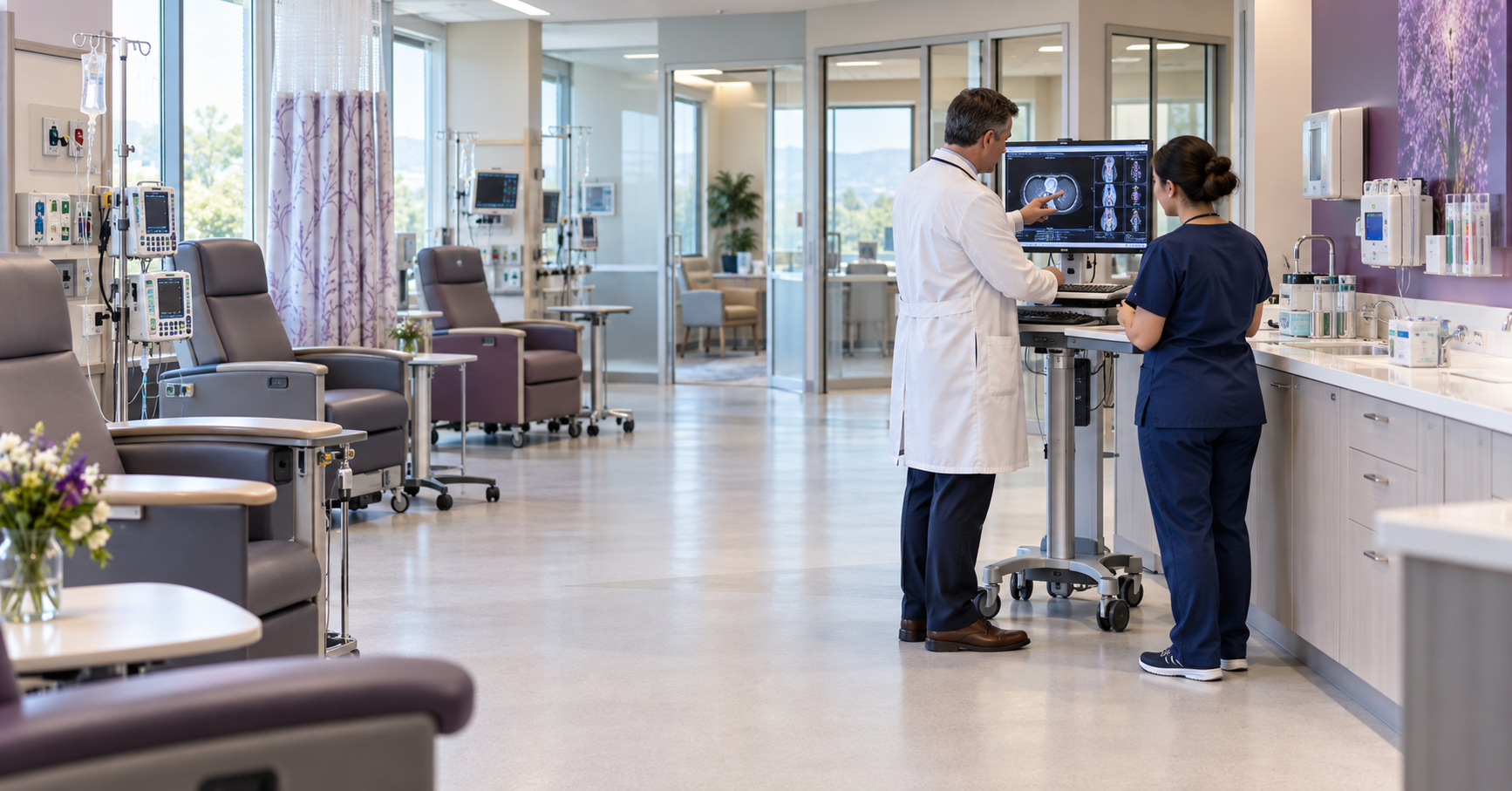
Learn about cancer treatments, supportive care and the approaches described by clinics. Each guide gives you a clearer starting point and practical questions to take into a conversation.
Browse by purpose, search a name or abbreviation, or choose a letter. Open any guide to understand the approach and find clinics that report offering it.
Focal ablation of selected prostate tissue, including use in localized intermediate-risk prostate cancer programs
NanoKnife is a device used for irreversible electroporation, or IRE. A clinician places needle electrodes around a planned target and delivers brief electrical pulses that disrupt cell membranes without relying on heat or freezing. In prostate care, the current U.S.…
Prevention and treatment of nausea, vomiting and dehydration
Nausea and vomiting support helps prevent and control symptoms caused by cancer treatment or other medical problems. The oncology team may prescribe preventive medicines before treatment and additional medication for symptoms that break through. Eating strategies, hydration support and selected…
Nutrition support helps people meet changing food and fluid needs during cancer care. It may involve practical meal adjustments, treatment of eating difficulties, or specialist feeding support when needed. An oncology dietitian can adapt advice to symptoms, weight changes, the…
Practical rehabilitation for independence and daily activities
Occupational therapy helps people manage everyday activities affected by cancer, such as dressing, preparing food, caring for family or returning to work. The therapist looks at the task, the person’s abilities and the home or work environment. Support may include…
Adapted touch for comfort and short-term symptom support
Oncology massage adapts touch, pressure and positioning for a person affected by cancer. Sessions are usually intended to provide comfort, relaxation or help with selected symptoms rather than to treat the cancer. A therapist with oncology experience considers treatment history,…
Device-specific investigational approach; evidence depends on cancer and regimen
Oncothermia commonly refers to modulated electro-hyperthermia, a technique using radiofrequency energy and specialized equipment. It is one approach within a wider family of heat-based treatments. Its marketing language and proposed biological effects do not make it interchangeable with every established…
Unproven cancer intervention with route-dependent safety risks
Ozone therapy is a broad label for procedures involving a highly reactive form of oxygen. Clinics may describe treating blood outside the body before returning it, or other forms of exposure. These procedures differ from prescribed oxygen and hyperbaric oxygen…
Symptom relief and support alongside serious-illness care
Palliative care helps people with cancer manage symptoms, emotional strain and the practical effects of illness. It can begin at diagnosis and continue alongside treatment intended to cure or control cancer. A team may help with pain, nausea, breathlessness, difficult…
Established receptor-targeted radiation for selected neuroendocrine tumors
PRRT attaches a radioactive substance to a molecule that binds to receptors on certain neuroendocrine tumor cells. The treatment travels through the bloodstream and delivers radiation where it binds. Lutetium-177 DOTATATE is an established example for selected somatostatin receptor-positive gastroenteropancreatic…
Established local treatment for selected superficial or accessible lesions
Photodynamic therapy combines a light-sensitive medicine with a particular light source to damage abnormal cells. The medicine and light-delivery method depend on the treatment site. It is used for selected cancers and precancers on the skin or accessible tissue surfaces,…
Evidence-based treatment selection using tumor and patient characteristics
Precision oncology uses information about the cancer and the person to guide treatment choices. Molecular tests may identify a drug target, a meaningful cancer subtype or a clinical trial. The approach includes proven biomarker-guided treatments but also research uses with…
Established radiation technique for selected treatment plans
Proton therapy is external-beam radiation delivered using charged particles rather than X-rays. A treatment plan controls where much of the proton beam’s energy is deposited, which can reduce radiation exposure to some nearby tissues. It may be considered when protecting…
These guides organize publicly available and clinic-provided information. Services and availability can change, so confirm current details directly with the clinic.
FEATURED ACROSS THE UNITED STATES
Featured cancer centers across the United States.
Featured placement · demonstration clinics
Featured placement · demonstration clinicsHarbor Integrative Cancer CenterBoston, Massachusetts